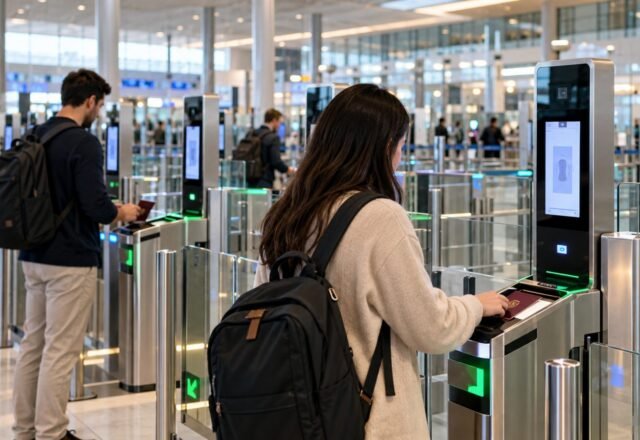

Searches for “Schengen visa” peak in late spring every year, as travellers rush to plan their European summer — and appointment slots disappear just as fast. This guide explains who needs a Schengen visa, how much it costs, where and when to apply, the documents you need and how the 90/180-day rule works.
Information comes from Europe-Visa’s 2026 Schengen guide. Rules and fees can change and vary slightly by country — always check the official consulate website before you apply. This is general information, not legal advice.
Who needs a Schengen visa?
- Need a visa: citizens of countries without a visa-free agreement with the EU (for example India, China, Morocco, Nigeria and many others).
- Don’t need a visa: citizens of visa-exempt countries such as the UK, USA, Canada and Australia for short stays — they’ll need ETIAS once it launches (see ETIAS & EES explained).
- Don’t need anything: EU, EEA and Swiss citizens (source).
Schengen visa fees 2026
| Applicant | Fee |
|---|---|
| Adults (12+) | €90 |
| Children 6–12 | €45 |
| Children under 6 | Free |
| Visa centre service fee (VFS, BLS…) | About €30–50 extra |
Source: Europe-Visa. Some categories (students, researchers, certain family members) pay reduced fees or nothing.
Where to apply
- Main destination: apply at the consulate (or its visa centre) of the country where you’ll spend the most days.
- Equal stays: apply to the country you’ll enter first.
- Visa centres: many countries outsource applications to VFS Global, BLS International or TLScontact (source).
When to apply
- Ideally about 3 months before travel — summer and Christmas appointments can be 6–8 weeks away (source).
- At the latest, leave enough time for processing — at least several weeks before your trip.
- Processing time: usually about 15 calendar days, but 30–45 days in peak periods (source).
Schengen visa documents checklist
- Completed and signed application form
- Passport issued within the last 10 years, valid at least 3 months beyond your departure, with two blank pages
- Two recent passport photos meeting Schengen standards
- Travel insurance with at least €30,000 medical and repatriation cover, valid in all Schengen countries (source) — see do you need travel insurance?
- Flight reservation (return or onward)
- Proof of accommodation (hotel bookings or invitation letter)
- Proof of funds: recent bank statements
- Proof of employment or studies (letter, payslips, enrolment)
- Cover letter explaining your trip and itinerary
Step by step: how to apply
- Choose the right consulate (main destination).
- Book an appointment online — as early as possible.
- Prepare documents using the checklist above.
- Attend the appointment: submit documents, give fingerprints and pay the fee.
- Track your application and collect your passport.
The 90/180-day rule explained
You can stay in the Schengen area for a maximum of 90 days within any rolling 180-day period (source). Count back 180 days from any date of your stay: the total days spent in Schengen in that window must not exceed 90. Since April 2026, the Entry/Exit System records your entries and exits automatically, so overstays are easier to detect — see our EES guide.
Schengen countries (29)
Austria, Belgium, Bulgaria, Croatia, Czech Republic, Denmark, Estonia, Finland, France, Germany, Greece, Hungary, Iceland, Italy, Latvia, Liechtenstein, Lithuania, Luxembourg, Malta, Netherlands, Norway, Poland, Portugal, Romania, Slovakia, Slovenia, Spain, Sweden and Switzerland. Note: Ireland and Cyprus are in the EU but not in Schengen, and the UK is outside both.
Tips to avoid a refusal
- Be consistent: your itinerary, bookings and cover letter should match.
- Show strong ties to your home country (job, studies, family, property).
- Prove sufficient funds for your stay.
- Use refundable bookings for flights and hotels where possible.
- Apply early — rushed applications are more likely to have mistakes.
Planning your itinerary? See our guides to Paris and Madrid.
Example: a trip to Italy counts towards your 90 days in the Schengen area. Planning Rome? See our Rome travel guide and the Rome tourist tax.
More travel tips
- How to find cheap flights
- Do you need travel insurance?
- The ultimate packing checklist
- Travel eSIM guide
- How to book a hotel for less
- Renting a car abroad & IDP
FAQ: Schengen visa
How much does a Schengen visa cost in 2026?
€90 for adults, €45 for children aged 6–12 and free under 6, plus visa-centre fees of about €30–50.
How long does a Schengen visa take?
Usually about 15 calendar days after your appointment, and 30–45 days in peak periods.
How early can I apply for a Schengen visa?
Up to six months before travel; ideally about three months ahead.
Which country should I apply to?
The country where you’ll spend the most days, or your first entry country if stays are equal.
Do I need travel insurance for a Schengen visa?
Yes — at least €30,000 medical and repatriation cover valid in all Schengen countries.
What is the 90/180 rule?
You can spend a maximum of 90 days in the Schengen area in any rolling 180-day period.
Book your trip: our favourite tools
The trusted services we use to plan our own trips.
Some links are affiliate links: if you book through them we may earn a commission at no extra cost to you.