Two new systems are changing how non-EU visitors enter Europe: the Entry/Exit System (EES), already in use at borders, and the European Travel Information and Authorisation System (ETIAS), a pre-travel authorisation that is still to come. There’s a lot of confusion — and a lot of unofficial websites — so here’s what you actually need to know.
This guide is based on reporting from Schengen Visa Info (19 October 2026) and the Majorca Daily Bulletin (19 October 2026). Always check the official EU travel website before you travel.
ETIAS and EES at a glance
| EES (Entry/Exit System) | ETIAS | |
|---|---|---|
| What it is | Digital border registration (fingerprints, facial image) | Online travel authorisation before you travel |
| Status (Oct 2026) | Fully operational since 10 April 2026 | Not in operation; no start date announced |
| Who | Non-EU short-stay visitors (visa-exempt and visa holders) | Visitors from about 59 visa-exempt countries (e.g. UK, US, Canada, Australia) |
| Cost | Free | €20 when launched; free under 18 and 70+ |
| Where | At the border, on arrival | Online, before travel |
Sources: Schengen Visa Info and Majorca Daily Bulletin.
The Entry/Exit System (EES) explained
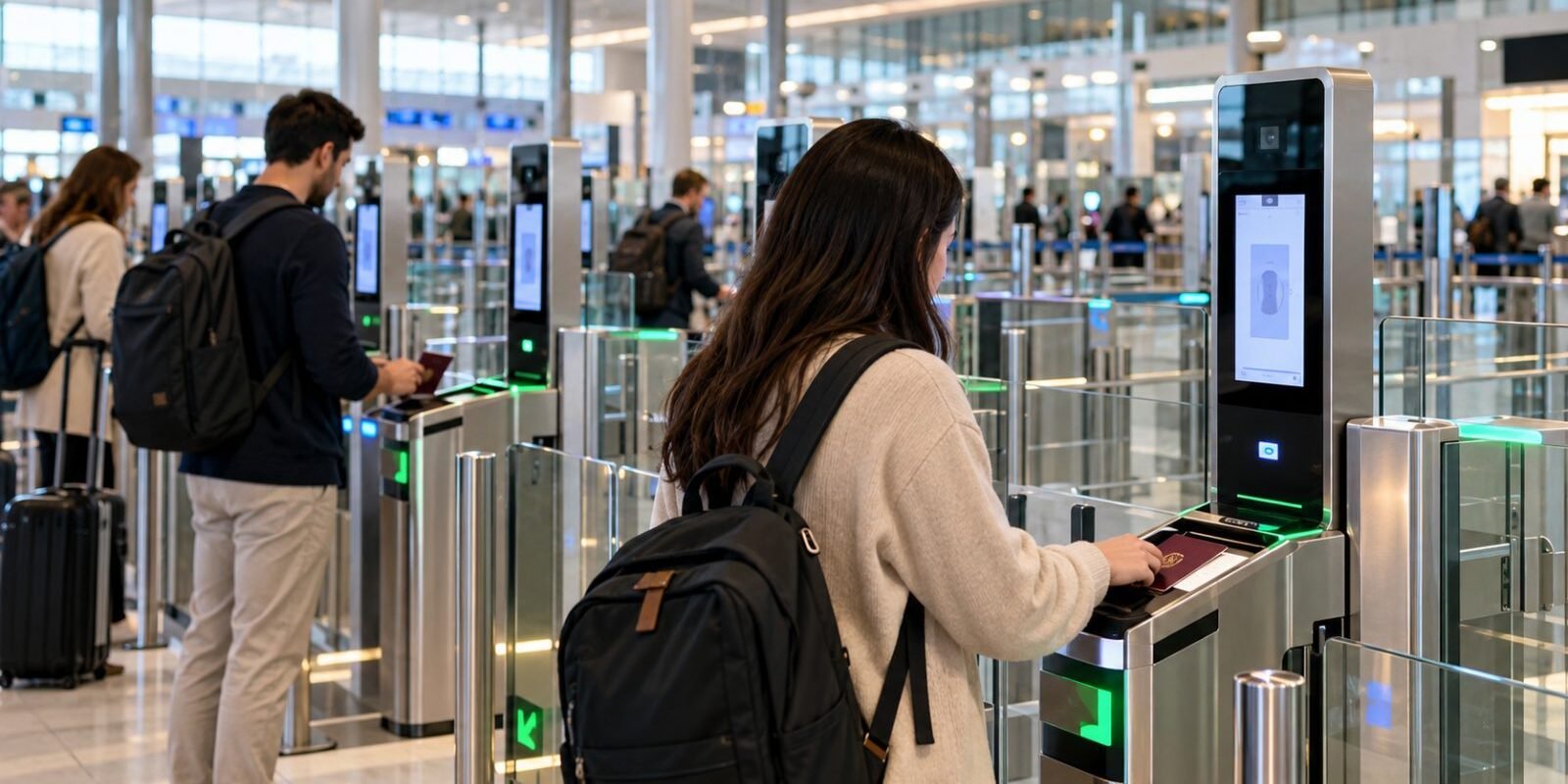
The EES replaces passport stamping for non-EU travellers on short stays. The first time you cross an external Schengen border after its launch, your passport details, fingerprints and a facial image are recorded; on later trips, your entries and exits are logged automatically (source).
- Launch: rolled out gradually from 12 October 2025 and fully operational on 10 April 2026 (source).
- Who it applies to: non-EU nationals travelling for short stays — not EU citizens or residents with a residence permit.
- Cost: free — there’s nothing to apply for in advance.
- What changes for you: your first crossing may take longer while you register at a kiosk or border desk.
- Delays: Airlines for Europe reported border delays of up to five hours at some major airports linked to technical issues in 2026 (source) — leave plenty of time.
- The 90/180 rule is now calculated automatically — see our Schengen visa guide.
ETIAS explained
ETIAS will be a simple online authorisation, similar to the US ESTA, for travellers who don’t need a Schengen visa.
- Status: not in operation, no applications are being collected and no launch date has been set (source).
- Fee: €20 once launched; free for applicants under 18 or aged 70 and over (source).
- Validity: three years, or until your passport expires, whichever comes first.
- Countries covered: 30 European countries — the 29 Schengen states plus Cyprus.
- Who will need it: citizens of about 59 visa-exempt countries and territories, including the UK, USA, Canada and Australia.
- Announcement: the EU says it will announce the start date several months before launch; a transition period is expected.
Beware of fake ETIAS websites
Because ETIAS isn’t running yet, any website taking ETIAS applications or payments today is not official (source). When it does launch, apply only through the official EU website or app — never through sites charging extra “service fees”.
Do I need ETIAS or a visa?
| You are… | What you need for a short trip (October 2026) |
|---|---|
| EU/EEA/Swiss citizen | Passport or national ID — no EES, no ETIAS |
| From a visa-exempt country (UK, US, Canada, Australia…) | Valid passport; EES registration at the border; ETIAS later, once launched |
| From a country that needs a visa | Schengen visa — see our Schengen visa guide; EES registration at the border |
Tips for crossing EU borders in 2026
- Allow extra time at airports and ports for your first EES registration.
- Check your passport validity — at least three months beyond your planned departure from the Schengen area, and issued within the last 10 years.
- Carry proof of onward travel and accommodation — border guards can ask.
- Get travel insurance — see do you need travel insurance?.
- Follow official updates for the ETIAS start date.
Planning a European city break? See our guides to Paris, Madrid and London (the UK has its own ETA system for visitors).
More travel tips
- How to find cheap flights
- Do you need travel insurance?
- The ultimate packing checklist
- Travel eSIM guide
- How to book a hotel for less
- Renting a car abroad & IDP
FAQ: ETIAS and EES
Do I need ETIAS for Europe in 2026?
No. ETIAS isn’t in operation and has no start date, so there’s nothing to apply for in 2026.
When will ETIAS start?
No official date has been set. The EU says it will announce the start date several months before launch.
How much will ETIAS cost?
€20, with free applications for under-18s and people aged 70 and over.
What is the EES?
The Entry/Exit System records non-EU travellers’ fingerprints, facial image and entries and exits at Schengen borders. It’s been fully operational since 10 April 2026.
Do I have to pay for the EES?
No, EES registration is free and happens at the border.
Is ETIAS the same as a visa?
No — it will be a simple online authorisation for visa-exempt travellers, not a visa.
Book your trip: our favourite tools
The trusted services we use to plan our own trips.
Some links are affiliate links: if you book through them we may earn a commission at no extra cost to you.