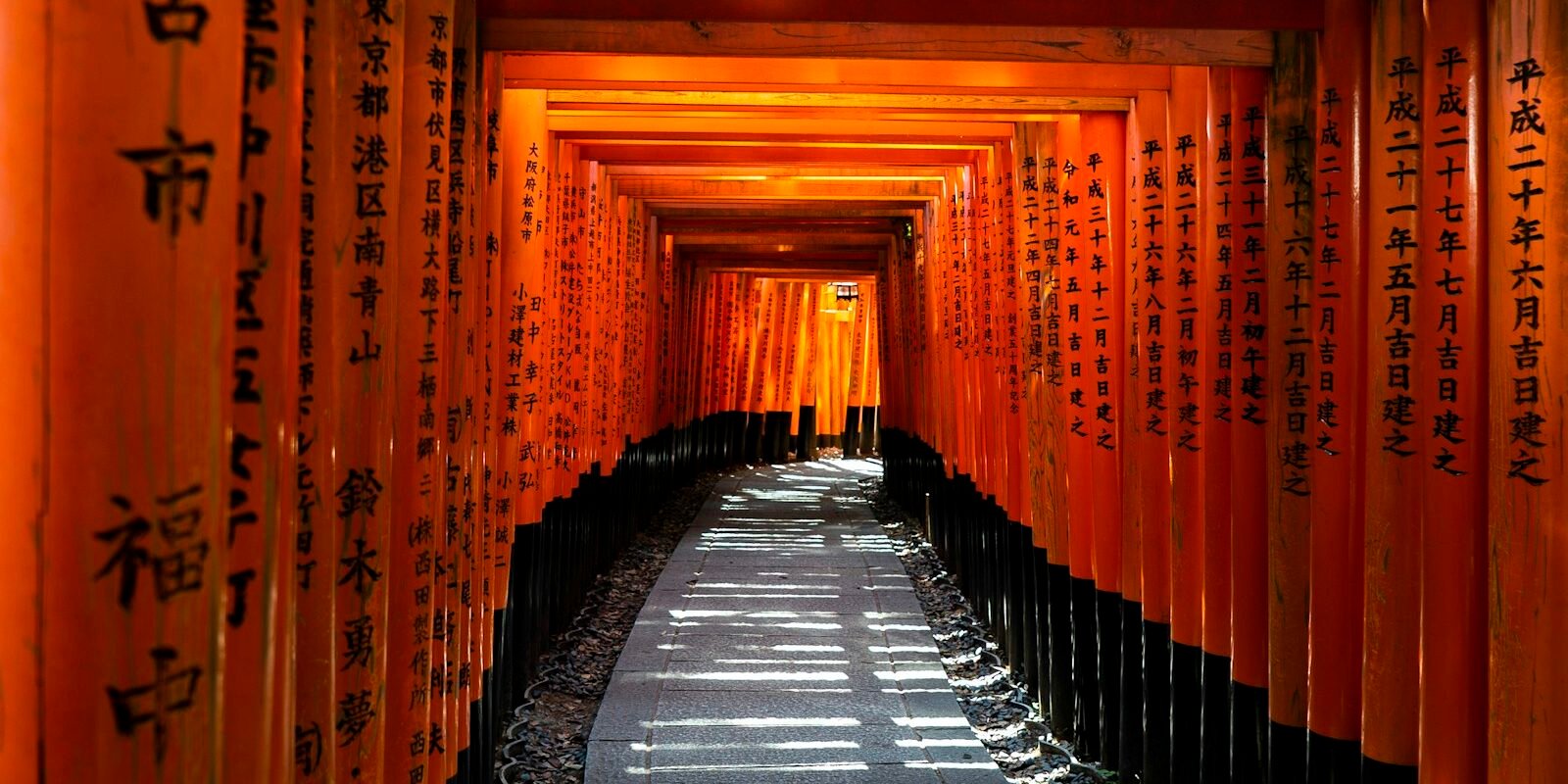
Fushimi Inari is the head shrine of Inari, the Shinto god of rice and business, and its trails are lined with around 10,000 vermilion torii gates donated by companies and individuals. It’s Kyoto’s most photographed sight and one of the few major ones that costs nothing. This guide covers how to get there, the hike, the best times and etiquette.
Fushimi Inari at a glance
| Details | |
|---|---|
| Entry | Free |
| Hours | Open 24 hours, every day (prayer halls and shops have set hours) |
| Nearest stations | JR Inari (Nara Line), Keihan Fushimi-Inari |
| From Kyoto Station | About 5 minutes by JR, ¥150 with an IC card |
| Time needed | 1 hour (lower gates) to 2–3 hours (summit loop) |
| Best time | Before 8:00, or late afternoon and evening |
Fee and hours: Self Guide Japan (checked September 2026).
How to get there
- JR Nara Line: from Kyoto Station to Inari Station (two stops, about 5 minutes). The shrine gate is directly across the road. Only local trains stop at Inari.
- Keihan Line: to Fushimi-Inari Station, about 5 minutes’ walk — useful if you’re staying in Gion or along the Kamo River.
- Combine with: Tofuku-ji temple (one stop north) or Sake breweries in Fushimi (a few stops south).
The hike: route and times
- Main shrine buildings — the orange Romon gate and main hall at the entrance.
- Senbon Torii — two parallel tunnels of closely spaced gates, about 10 minutes in. This is where the crowds are.
- Okusha (inner shrine) — with the “omokaru” stones: make a wish, then lift the stone; if it feels lighter than expected, your wish may come true.
- Yotsutsuji intersection — about 30–45 minutes up, with the best view over Kyoto. Many visitors turn back here.
- Summit loop (Ichinomine, 233 m) — another 30–45 minutes, quieter with smaller shrines and stone foxes.
The paths are stepped and steep in places. Wear comfortable shoes and bring water; there are small teahouses along the way.
Best times to visit
- Before 8:00: soft light and empty gates for photos.
- Evening: lanterns light the lower gates; the upper mountain is dark and quiet — bring a light.
- Avoid: 10:00–16:00 on weekends and in cherry blossom and autumn leaf seasons.
- New Year: one of Japan’s busiest shrines for the first visit of the year (hatsumode); expect huge crowds.
Etiquette
- Bow slightly before passing through the main gate, and walk to the side of the path, not the centre.
- At the purification fountain, rinse your left hand, right hand, then your mouth (from your hand, not the ladle).
- Don’t block paths for photos, and don’t touch or climb on the gates.
- Take your rubbish with you; there are few bins.
Food nearby
The street outside the shrine sells kitsune udon and inari-zushi (rice in fried tofu, said to be the foxes’ favourite food), plus grilled skewers and sweets. Compare Kyoto walking and food tours.
More Kyoto guides
- Kyoto itinerary
- Best things to do in Kyoto
- Where to stay in Kyoto
- Best time to visit Kyoto (cherry blossoms and autumn leaves)
- Tokyo to Kyoto by shinkansen
- Kansai airport to Kyoto
- Kyoto accommodation tax
- Kyoto travel guide
FAQ: Fushimi Inari
Is Fushimi Inari free?
Yes. Entry is free and the shrine is open 24 hours.
How long does it take to hike Fushimi Inari?
About 2–3 hours for the full loop to the summit; 1 hour to see the lower gates and reach the viewpoint.
What is the best time to visit Fushimi Inari?
Early morning before 8:00, or in the evening.
How do I get to Fushimi Inari from Kyoto Station?
Take the JR Nara Line two stops to Inari Station, about 5 minutes.
How many torii gates are there at Fushimi Inari?
Around 10,000, donated by businesses and individuals.
Book your trip: our favourite tools
The trusted services we use to plan our own trips.
Some links are affiliate links: if you book through them we may earn a commission at no extra cost to you.