Quick answer: Don’t miss Jackson Square, beignets at Café du Monde, live jazz on Frenchmen Street, the St. Charles streetcar to the Garden District, the National WWII Museum and a swamp tour.
French Quarter
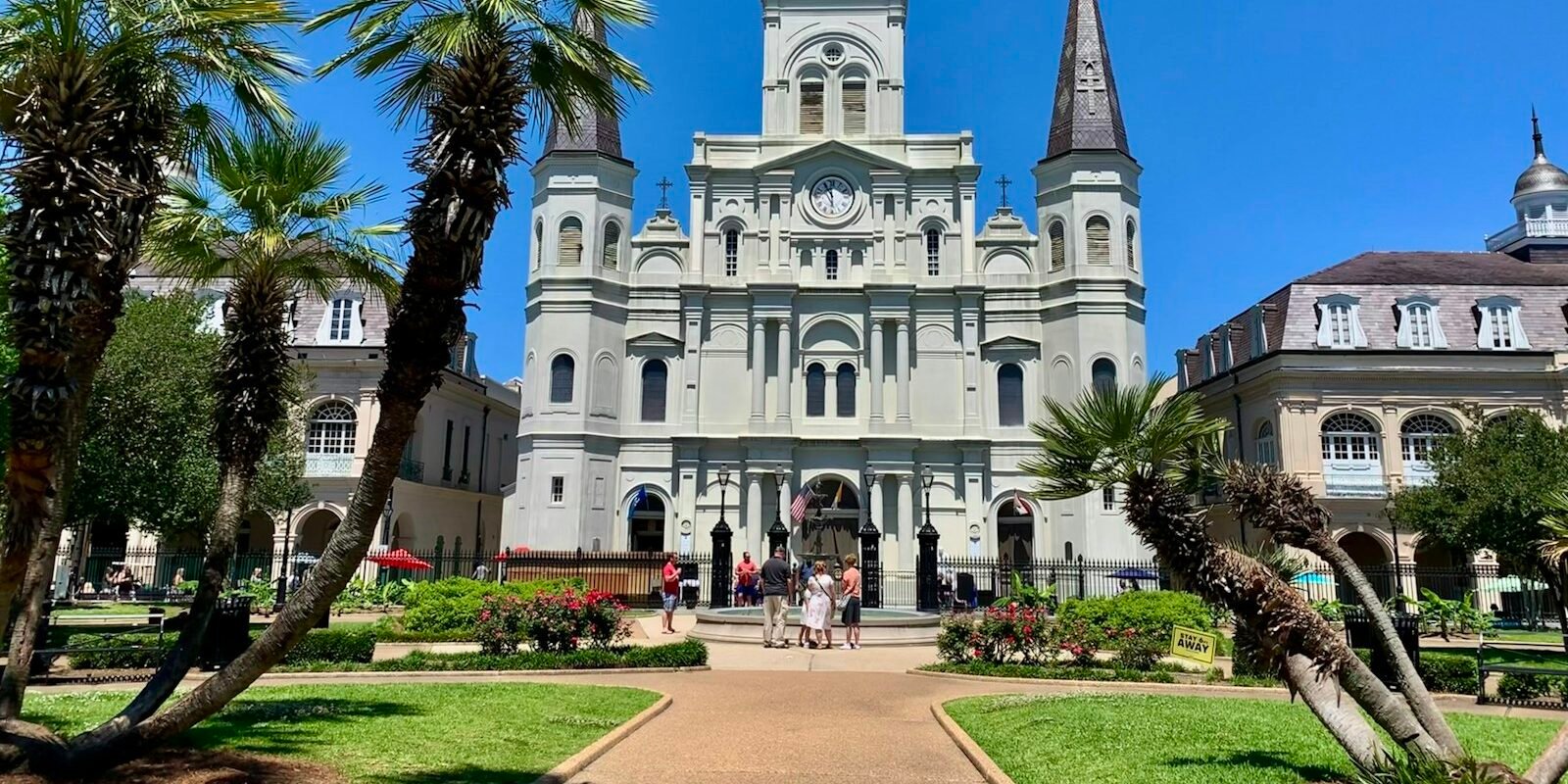
- Jackson Square and St. Louis Cathedral – street artists and brass bands.
- Café du Monde – beignets under a mountain of powdered sugar.
- Royal Street – antiques, galleries and street performers.
- French Market – food stalls and crafts.
- Preservation Hall – intimate traditional jazz sets.
- Bourbon Street – loud and boozy; see it once at night.
- The Historic New Orleans Collection – free history galleries.
Music and nightlife
- Frenchmen Street – clubs like the Spotted Cat and d.b.a.
- Second lines – Sunday brass-band parades (season roughly August–June).
- A jazz cruise on the Steamboat Natchez.
Beyond the Quarter
- St. Charles streetcar – the oldest continuously operating streetcar line in the world.
- Garden District – mansions and Magazine Street shopping.
- National WWII Museum – allow at least half a day.
- City Park – sculpture garden, New Orleans Museum of Art and beignets at Morning Call.
- St. Louis Cemetery No. 1 – visit by guided tour only (Marie Laveau’s tomb).
- Treme – one of the oldest Black neighbourhoods in the US.
Food
- Po’boys and muffulettas – try Central Grocery or Parkway Bakery.
- Creole fine dining – Commander’s Palace or Galatoire’s.
- A cooking class – learn gumbo and pralines.
Day trip
- Swamp tour or plantation visit – the bayou or Whitney Plantation, which focuses on the lives of enslaved people.
FAQ: things to do in New Orleans
What is New Orleans most famous for?
Jazz, Mardi Gras, Creole and Cajun food, and the French Quarter’s architecture.
What can you do for free?
Watch street performers in Jackson Square, catch a second line, walk the Garden District and visit City Park.
More New Orleans guides
- New Orleans travel guide
- New Orleans itinerary: 2, 3 or 4 days
- Where to stay in New Orleans
- Best time to visit New Orleans
- New Orleans airport to the French Quarter
- Mardi Gras in New Orleans
- New Orleans swamp tours
- French Quarter guide
Plan your trip to New Orleans
The trusted services we use to plan our own trips.