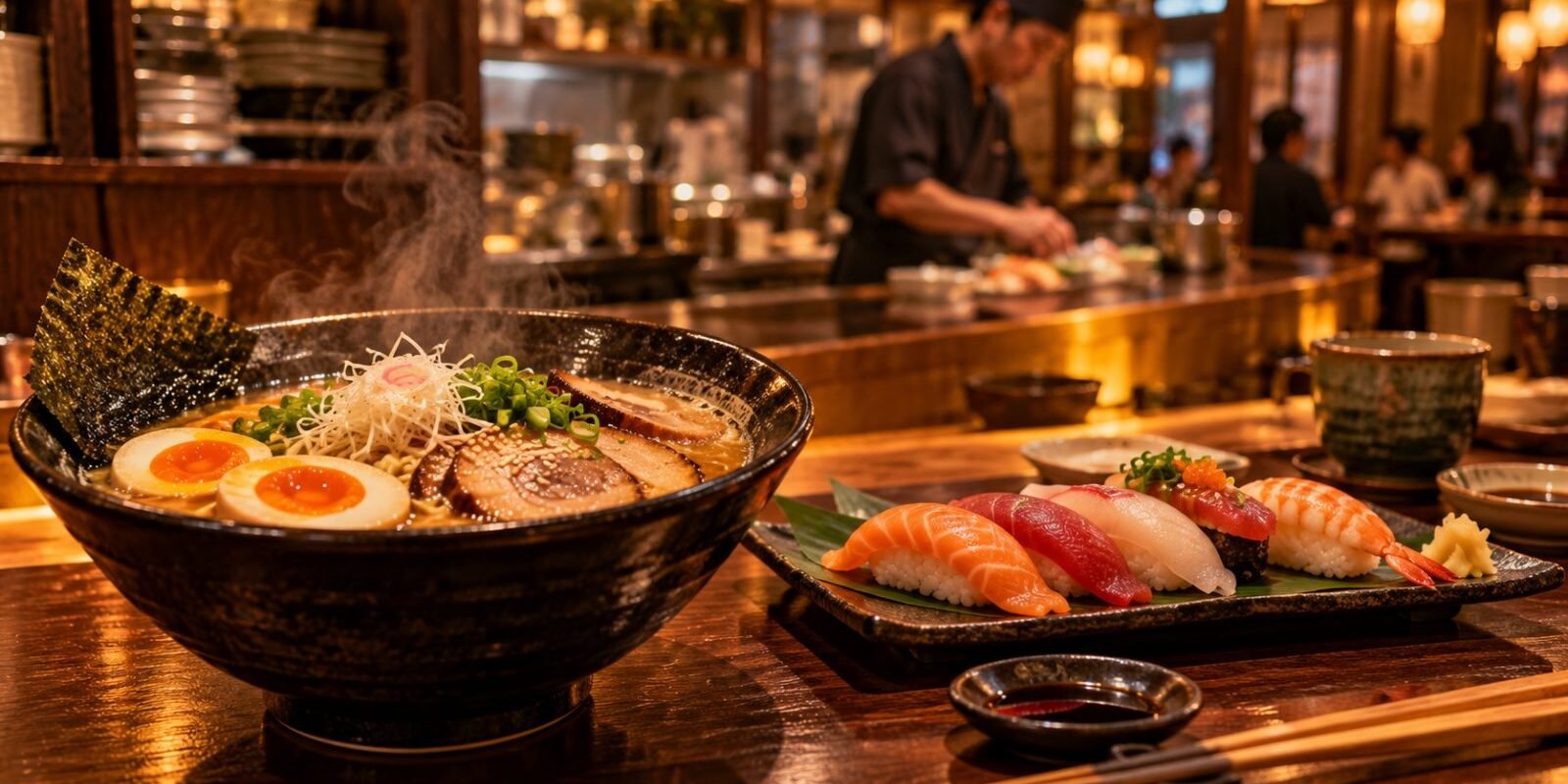
Tokyo is one of the world’s great food cities, and you don’t need a big budget to eat brilliantly. The same city that has some of the most famous sushi counters on earth also has ¥500 beef bowls, steaming ramen shops in every station and department-store food halls that look like jewellery shops.
This Tokyo food guide explains what to eat, where to find it, how much it costs and how to order, with prices from MileAsia’s Tokyo Food Guide (updated October 2026) and our own research. Prices vary a lot by place, so treat them as typical ranges.
What to eat in Tokyo
| Dish | What it is | Typical price |
|---|---|---|
| Sushi | Vinegared rice with raw fish | ¥200–500 per piece at standing counters; omakase from ¥30,000 |
| Ramen | Noodle soup — shoyu, miso, tonkotsu, tsukemen | ¥600–900 at station counters; more at famous shops |
| Gyudon | Beef and onion over rice | under ¥500 at chains like Yoshinoya, Sukiya, Matsuya |
| Tempura / tendon | Light battered seafood and vegetables | ¥1,000–1,500 for a tendon bowl |
| Tonkatsu | Breaded pork cutlet | set lunches from about ¥1,500 |
| Yakitori | Grilled chicken skewers | izakaya evenings ¥2,000–5,000 with drinks |
| Onigiri | Rice balls from convenience stores | from about ¥120 |
Price ranges: MileAsia. Not all prices are verified for every shop in 2026.
Other dishes to try
- Monjayaki: Tokyo’s own runny cousin of okonomiyaki, cooked on a griddle — Tsukishima’s “Monja Street” is the place.
- Soba and udon: buckwheat or thick wheat noodles, hot or cold.
- Wagyu: from yakiniku (grill-it-yourself) to sukiyaki.
- Kaiseki: refined multi-course Japanese dining.
- Sweets: matcha desserts, taiyaki, mochi, fruit sandos and Harajuku crêpes.
Where to eat in Tokyo
Tsukiji Outer Market
The wholesale fish market moved to Toyosu, but the Tsukiji Outer Market lives on with hundreds of stalls selling sushi, grilled scallops, tamagoyaki (sweet omelette) and street food. Stalls open from about 7:00 (source), and many close by early afternoon — go for breakfast. It’s on Day 3 of our Tokyo itinerary.
Yokocho alleys
- Omoide Yokocho (Shinjuku): narrow lanes of tiny yakitori bars by the tracks.
- Yurakucho: yakitori under the elevated railway south of Tokyo Station, operating since the 1940s (source).
- Golden Gai (Shinjuku): more than a hundred tiny bars; some charge a seat fee.
- Ameyoko (Ueno): a lively market street with cheap street food and izakaya.
Depachika (department-store food halls)
The basement food floors of department stores in Ginza, Shinjuku and Nihonbashi sell bento, sushi, wagashi sweets and perfect fruit. Prepared food is often discounted after about 7 p.m. (source).
Konbini (convenience stores)
7-Eleven, FamilyMart and Lawson are a genuine part of Tokyo’s food culture: onigiri, sandwiches, fried chicken and surprisingly good hot meals, open 24 hours.
Best food neighbourhoods
| Area | Known for |
|---|---|
| Shinjuku | Omoide Yokocho, Golden Gai, ramen, izakaya |
| Tsukiji / Ginza | Sushi, the Outer Market, depachika |
| Shibuya | Standing sushi bars, food halls, cafés |
| Asakusa | Tempura, street snacks on Nakamise, traditional sweets |
| Ueno | Ameyoko market, cheap izakaya |
| Yanaka, Koenji, Shimokitazawa | Local, old-town and indie food scenes |
Choosing a base? Shinjuku and Shibuya are the best areas for food lovers — see where to stay in Tokyo.
How to order and eating etiquette
- Ticket machines: many ramen and gyudon shops have a machine at the entrance — pay, take the ticket and hand it to the staff. Some machines take cash only.
- No tipping: tipping isn’t part of Japanese culture; just say gochisōsama deshita (“thank you for the meal”).
- Otōshi: izakaya often serve a small appetiser with a seat charge.
- Slurping noodles is perfectly fine.
- Don’t eat while walking in busy streets — eat by the stall or shop.
- Carry some cash: cards are widely accepted, but small places and markets may be cash-only.
- Reservations: famous sushi and kaiseki restaurants often need booking weeks ahead.
Eating in Tokyo on a budget
- Lunch sets (teishoku): many restaurants offer great-value set lunches.
- Chains: gyudon, curry, conveyor-belt sushi and standing soba shops.
- Konbini breakfasts: onigiri and coffee for a few hundred yen.
- Depachika after 7 p.m.: discounted bento and sushi.
A rough daily food budget: about ¥3,000 eating cheaply, ¥6,000–10,000 mid-range, much more for fine dining (our estimate). Want a guide? Compare Tokyo food tours.
Vegetarian and dietary needs
Much Japanese food uses fish-based dashi stock, so vegetarians should look for shojin ryori (Buddhist temple cuisine) and specialist vegan restaurants, and carry a card explaining dietary needs in Japanese. Halal and gluten-free options are increasing in central Tokyo but still limited.
More Tokyo guides
- Best things to do in Tokyo
- Tokyo itinerary
- Best time to visit Tokyo
- Where to stay in Tokyo
- Tokyo travel guide
FAQ: Tokyo food
What food is Tokyo famous for?
Sushi, ramen, tempura, yakitori, monjayaki and soba — plus world-class fine dining.
Where is the best place to eat sushi in Tokyo?
Try the Tsukiji Outer Market for breakfast, a standing sushi bar for good value, or book an omakase counter for a special meal.
How much does food cost in Tokyo?
Ramen around ¥600–900, gyudon under ¥500, izakaya ¥2,000–5,000 per person with drinks; fine-dining omakase from about ¥30,000.
Do you tip in Tokyo?
No, tipping is not expected in Japan.
Is Tokyo food expensive?
Not necessarily — chains, ramen shops, lunch sets and convenience stores make it easy to eat well on a budget.
Is a Tokyo food tour worth it?
Yes, especially early in your trip: you’ll taste many dishes and learn how to order.
Book your trip: our favourite tools
The trusted services we use to plan our own trips.
Some links are affiliate links: if you book through them we may earn a commission at no extra cost to you.