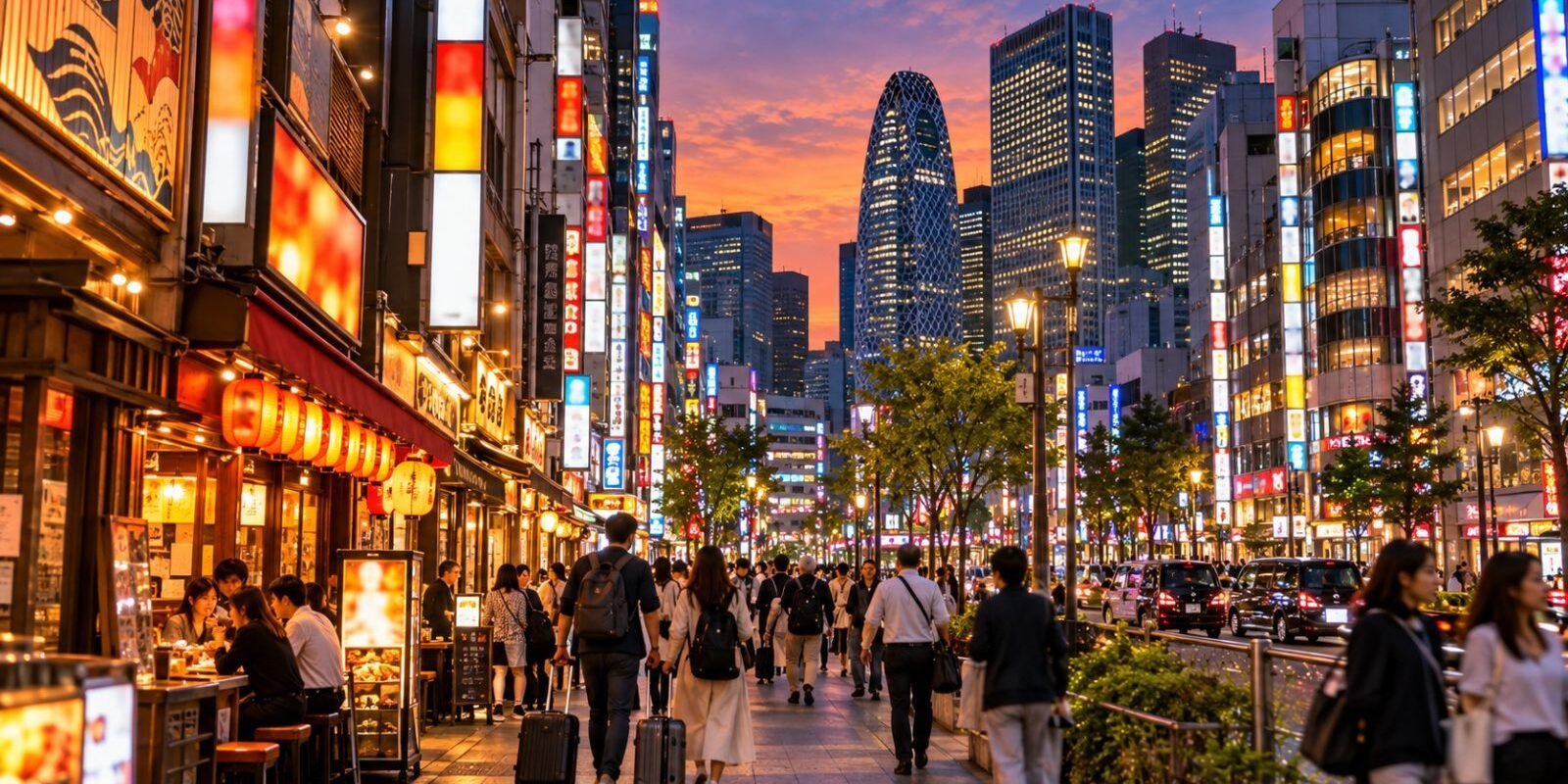
Tokyo is enormous — a metropolis of more than 37 million people — but it’s also one of the easiest cities in the world to get around. The trick is to stay near a major station, ideally on the JR Yamanote loop line, so you can reach every neighbourhood in 10–30 minutes.
This guide explains where to stay in Tokyo for first-timers, families, couples and budget travellers, with the pros and cons of each area, hotel picks and the accommodation tax. Recommendations draw on our research and guides such as Treksplorer (updated August 2026) and Girl on a Zebra.
Best areas to stay in Tokyo at a glance
| Area | Best for | Price level | Main station |
|---|---|---|---|
| Shinjuku | First-timers, nightlife, food, transport | Mid to high | Shinjuku (JR, Metro, private lines) |
| Shibuya | Shopping, Shibuya Crossing, young travellers | Mid to high | Shibuya (JR, Metro, private lines) |
| Ginza / Tokyo Station | Comfort, Shinkansen trips, luxury | High | Tokyo Station, Ginza |
| Asakusa | Traditional Tokyo, value | Budget to mid | Asakusa |
| Ueno | Budget, museums, Skyliner to Narita | Budget to mid | Ueno |
Shinjuku — the best area for first-time visitors
Shinjuku has the world’s busiest station, connecting you to almost everywhere (including the Narita Express and buses to Mount Fuji). By night it’s all neon, izakaya alleys like Omoide Yokocho and the bars of Golden Gai; by day, the peaceful Shinjuku Gyoen garden. The free observatory at the Tokyo Metropolitan Government Building is next door.
Pros: transport, food, nightlife, choice of hotels. Cons: busy and loud; the station is huge and confusing at first (source).
- Luxury: Park Hyatt Tokyo.
- Mid-range: Hotel Gracery Shinjuku (the “Godzilla hotel”) and WPU Hotel Shinjuku.
- Calmer mid-range: Daiwa Roynet Hotel Shinjuku.
- Budget: Via Inn Shinjuku.
Shibuya — shopping and a slightly calmer base
Home to the famous Scramble Crossing, Shibuya Sky and endless shops and cafés, with Harajuku and Meiji Jingu one stop away. It feels a bit more polished and relaxed than Shinjuku, and it’s only one stop from Shinjuku (source).
- Hotel Indigo Tokyo Shibuya — skyline views, rooftop.
- lyf Shibuya Tokyo — modern co-living style, good value.
- Shibuya Tokyu REI Hotel — two minutes from the crossing.
- Budget-leaning: Art Hotels Shibuya, a little outside the centre.
Planning to visit the rooftop? Read our Shibuya Sky tickets guide.
Ginza and Tokyo Station — comfort and Shinkansen access
Ginza is elegant, clean and full of department stores, while Tokyo Station has direct bullet trains to Kyoto and Osaka. It’s close to the Tsukiji Outer Market, the Imperial Palace and teamLab Planets, and closer to Haneda than Shinjuku or Shibuya (source). Hotels here are on the expensive side.
- Luxury: The Tokyo Station Hotel.
- Upper mid-range: Hotel Metropolitan Tokyo Marunouchi, Mitsui Garden Hotel Ginza Premier, Millennium Mitsui Garden Hotel Tokyo.
- Boutique: Hotel The Celestine Ginza and Hotel Grandbach Tokyo Ginza.
Asakusa — traditional Tokyo at better prices
Asakusa is home to Sensō-ji, Tokyo’s oldest temple, the Nakamise shopping street and views of Tokyo Skytree across the river. It’s quieter at night and generally more affordable than central districts, but farther from Shinjuku and Shibuya (source). The Keikyu Line runs direct from Haneda.
- Budget: APA Hotel Asakusa Ekimae (small rooms) and Richmond Hotel Asakusa.
- Mid-range: The Gate Hotel Kaminarimon by Hulic and Asakusa View Hotel.
- Traditional: Ryokan Asakusa Shigetsu — a ryokan with a bath overlooking Skytree.
Ueno — budget base with museums and parks
Ueno Park has several major museums and a zoo, and Ueno Station is the terminus of the Skyliner from Narita. It has some of the cheapest hotels in central Tokyo, with Akihabara just a few minutes away by train (source).
- Hotel Sunroute Stellar Ueno, Minn Ueno (apartment-style with kitchenettes) and Mitsui Garden Hotel Ueno.
Other areas worth knowing
- Roppongi: nightlife, art museums and Roppongi Hills; good for nightlife lovers.
- Ikebukuro: a big transport hub with good-value hotels, slightly away from the main sights.
- Akihabara: fun for a half-day of electronics, anime and games, but fewer good hotels (source).
Where to stay in Tokyo with family
- Ueno: parks, museums and the zoo, with apartment-style hotels.
- Tokyo Station / Ginza: calm, safe streets and easy trains to Tokyo Disney Resort (via JR) — see our Tokyo Disneyland tickets guide.
- Shibuya: lively but family-friendly, with easy access to parks and shops.
Where to stay in Tokyo on a budget
Asakusa and Ueno have the best-value hotels and hostels. Business hotel chains (such as APA, Sotetsu Fresa, Via Inn) offer clean, compact rooms all over the city. Staying a few stations from a big hub on a direct line saves money without much extra travel.
Tokyo accommodation tax
Tokyo currently charges a small accommodation tax of about ¥200 per person per night, usually added at the hotel. From April 2027, the city plans to switch to a 3% tax on room rates above ¥13,000 per night — for example, about ¥1,800 extra on a ¥60,000 room (Executive Traveller).
Tips for booking a hotel in Tokyo
- Book early for cherry blossom season (late March–early April), Golden Week (late April–early May) and autumn leaves.
- Stay within 5 minutes’ walk of a station — ideally on the Yamanote Line.
- Check bed sizes: Japanese “double” beds can be narrow.
- Use luggage forwarding between hotels when travelling around Japan.
- Consider a ryokan night for a traditional experience.
More Tokyo guides
- Tokyo itinerary
- Narita and Haneda to Tokyo
- Is the JR Pass worth it?
- Tokyo travel guide
- Tokyo food guide
FAQ: Where to stay in Tokyo
What is the best area to stay in Tokyo for first-timers?
Shinjuku or Shibuya: both are major transport hubs with great food, shopping and nightlife.
Is it better to stay in Shinjuku or Shibuya?
Shinjuku for nightlife, transport and hotel choice; Shibuya for shopping and a slightly calmer base. They’re only one stop apart.
Where should I stay in Tokyo on a budget?
Asakusa and Ueno, which have the best-value hotels and easy airport links.
Is Asakusa a good place to stay?
Yes, for a traditional atmosphere and lower prices — but it’s farther from Shinjuku and Shibuya.
Where should families stay in Tokyo?
Ueno, Tokyo Station/Ginza or Shibuya, ideally in an apartment-style hotel with larger rooms.
Is there a hotel tax in Tokyo?
Yes — currently about ¥200 per person per night, with a planned change to 3% on rooms over ¥13,000 per night from April 2027.
Book your trip: our favourite tools
The trusted services we use to plan our own trips.
Some links are affiliate links: if you book through them we may earn a commission at no extra cost to you.